
"tropical coffee growing"
5000 article(s) found

Introduction of Ted Manor in the Sidamo producing area of Ethiopia in the tropical forest at an altitude of 1600m to 1800m.
Ethiopia (Ethiopia, Ethiopia), latitude 6 to 9 degrees north. Tropical forests ranging from 34 to 40 degrees east longitude, 1600 to 1800 m above sea level. Ethiopia produces between 200000 and 250000 tons of coffee each year. Today, Ethiopia has become one of the largest coffee producers in the world, ranking 14th in the world and fourth in Africa. Essene

Coffee tree (Coffee Plant)
Coffee. When it comes to coffee, the first thing that comes to mind is drinks. Beverage coffee is made from coffee beans. Where do coffee beans come from: coffee trees (flowering, fruiting) Coffee fruits, or coffee berries or coffee cherries (peeled and a series of processing) Coffee is a plant, the biological classification of ta is as follows: (Kingdom) Angiosperms quilts of the Plantae plant kingdom

The way coffee is grown.
Coffee cultivation is now widely grown in the ribbon between the Tropic of Cancer and the Tropic of Cancer. Coffee grown in different regions has different flavors. The unique soil, climatic conditions and planting methods of a country make the coffee produced in that country have a unique flavor. French winemakers call this phenomenon regional style. Geographically, global coffee
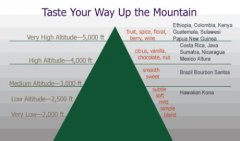
Effect of altitude on Coffee Flavor basic knowledge of Coffee
The influence of geographical location on the flavor of coffee beans is profound. All coffee grows in the tropics, and the altitude at which it grows has a profound effect on the taste of coffee. The tropical belt extends from 30 degrees north latitude to the equatorial regions of the southern mountains that produce the world's truly high-quality Arabica coffee. Central and South America, South Asia and some Pacific islands, south-central Africa is also the most important in the world.

A brief introduction to the Market Price of Costa Rican Diamond Hill Fine Coffee Bean varieties of Tropical fruits
However, while there are many advantages to growing coffee at higher elevations, the resulting additional transport costs must be taken into account, which is likely to make coffee production unprofitable. The coffee industry in Costa Rica has adopted new technologies to increase efficiency, including the use of electric eyes to select beans and identify coffee beans of irregular size due to the higher coffee industry in Costa Rica.

The Origin of Coffee Coffee is mainly produced in countries and etiquette
The origin of coffee the word coffee comes from the Greek word Kaweh, meaning strength and enthusiasm. Coffee tree is an evergreen shrub of Capsaceae. Daily coffee is made from coffee beans combined with a variety of cooking utensils, and coffee beans refer to the nuts in the fruit of coffee trees, which are then roasted with appropriate roasting methods. There are various legends about the origin of coffee, but most of them

Basic knowledge of Coffee beans cultivation conditions of Coffee trees
There is a noun called Coffee Belt. There are more than 60 coffee producing countries in the world, most of which are located in the tropics and subtropics between the Tropic of Cancer (latitude 2326). This coffee growing area is called a coffee belt or coffee area (Coffee Zone). The annual average temperature of the coffee belt is above 20 ℃, because the coffee tree is a tropical plant, and if the temperature is below 20 ℃,

Ethiopia Yega Cedar Fruit Tintin Cooperative G1 sun erupts rich tropical fruit flavor
Professional coffee knowledge exchange more coffee bean information please follow the coffee workshop (Wechat official account cafe_style) front street-Ethiopia Yega Snow Fruit Tintin Cooperative G1 Solar introduction in the coffee world, Ethiopia is famous for its high quality coffee in addition to being the birthplace of coffee. For example, the Yega Sheffield area, the Sidamo area and the ancient geisha

The Origin of Coffee when was coffee first discovered
Coffee was first found in Greece. The word coffee [1] comes from the Greek Kaweh, meaning strength and enthusiasm. Coffee tree is an evergreen shrub of Capsaceae. Daily coffee is made from coffee beans combined with a variety of cooking utensils, and coffee beans refer to the nuts in the fruit of coffee trees, which are then roasted with appropriate roasting methods. About the origin of coffee.

Cultivation of Costa Rican Diamond Hill boutique coffee beans with tropical fruits geographical location climate elevation
The higher the altitude, the better the coffee beans, not only because the higher altitude can increase the acidity of the coffee beans and thus increase the flavor, but also because the night temperature at the higher altitude is lower, which can make the trees grow slowly, thus the flavor of the coffee beans is stronger. In addition, due to the high altitude drop caused by sufficient rainfall, it is very beneficial to the growth of coffee trees. However, its negative effect is to increase

Panamanian coffee with floral scent and tropical fruit. Pokuit butterfly coffee beans.
Highlight the characteristics and aroma of this bean, the baking degree is on the verge of second explosion, near second explosion and one sound is the more commonly used baking degree, so that it can give play to the characteristics of the bean itself, if it is too shallow, it will produce miscellaneous odor, and if it is too deep, it will lose the aroma of flowers and fruit acid. of course, this should be adjusted according to the characteristics of coffee beans and the roaster's understanding of the beans. Floral, tropical fruit, strong

The basic knowledge of coffee beans the cultivation conditions of coffee coffee belt
There is a noun called Coffee Belt. There are more than 60 coffee producing countries in the world, most of which are located in the tropics and subtropics between the Tropic of Cancer (latitude 2326). This coffee growing area is called a coffee belt or coffee area (Coffee Zone). The annual average temperature of the coffee belt is above 20 ℃, because the coffee tree is a tropical plant, and if the temperature is below 20 ℃,

Relationship between altitude and coffee flavor | with the increase of altitude, the aroma of coffee will become gradually.
For information, please note that the geographical location of the coffee workshop (Wechat official account cafe_style) has a profound impact on the flavor of coffee beans. All coffee grows in the tropics, and the altitude at which it grows has a profound effect on the taste of coffee. The tropical belt extends from 30 degrees north latitude to the equatorial regions of the southern mountains that produce the world's truly high-quality Arabica coffee. Central and South America, South Asia and

Do Ugandan coffee beans taste good? the flavor of Ugandan Mangdie Coffee is rich with tropical fruit.
Professional coffee knowledge exchange more coffee bean information please follow the coffee workshop (Wechat official account cafe_style) front street-Uganda Mangdie Sun introduction Uganda is located in the source of the Nile, this is a landlocked country not near the sea in Africa, although the same as other East African countries have a long history of producing coffee, but due to the war caused by ethnic antagonism, the quality of coffee has always been unable to mention.

A brief introduction to the flavor and aroma characteristics of Costa Rican Diamond Hill coffee beans with tropical fruits
The higher the altitude, the better the coffee beans, not only because the higher altitude can increase the acidity of the coffee beans and thus increase the flavor, but also because the night temperature at the higher altitude is lower, which can make the trees grow slowly, thus the flavor of the coffee beans is stronger. In addition, due to the high altitude drop caused by sufficient rainfall, it is very beneficial to the growth of coffee trees. However, its negative effect is to increase
Where exactly is coffee produced? what's the difference between different varieties of coffee?
Communication of professional baristas Please pay attention to the production of coffee in the coffee workshop (Wechat official account cafe_style) where on earth is coffee produced and which plants grow from plants? Here, we will talk about the production of coffee, such as the representative countries of coffee, the plant types that coffee beans can take. [coffee production] Coffee in coffee producing areas, the equator spans the north and 25 degrees north back.

The way coffee is grown. A conscientious coffee tree.
Coffee cultivation is now widely grown in the ribbon between the Tropic of Cancer and the Tropic of Cancer. Coffee grown in different regions has different flavors. The unique soil, climatic conditions and planting methods of a country make the coffee produced in that country have a unique flavor. French winemakers call this phenomenon regional style. Geographically, global coffee

Manor Polina in Pokuit, Panama, is full of tropical fruit in the sun on Kaduai.
Country: Panama Panama: Pokuit Farm name: Polina Manor Los Lajones Berlina location: Baru Volcano East Slope Farm size: 16ha altitude: 1350cm 2100m Annual rainfall: 3500 mm soil quality: volcanic soil species: Kaduai, treatment: African elevated bed sun harvest time: January to April a year recognized

Geographical distribution of coffee bean producing areas and planting techniques of coffee trees
Geographical distribution editors the paradise of coffee growth is mostly located in countries with alpine terrain between the Tropic of Cancer. It is native to tropical Africa and is introduced and cultivated in South and Southwest China. [2] the cultivation technology editor requires that the origin of the coffee tree [4] is in Ethiopia in Africa. In botany, the coffee tree belongs to the evergreen tree of the coffee subgenus of Rubiaceae, and the so-called coffee beans are actually

Costa Rican Diamond Hill Fine Coffee beans of Tropical Fruit simple treatment method of Grinding degree and Baking degree
Other kinds of Brazilian coffee, such as Rio and Parana, can be produced in large quantities because they do not require too much care. Although the taste is rough, it is a kind of high-quality and inexpensive coffee, which has its own standards because it is distributed all over the country and its solid quality varies (NO.2NO.8 according to the number of sundries, NO.13NO.19 according to the size of beans, six grades according to taste).